

Airbus Launches Flight Tests for Next-Gen Folding Wings
Airbus is entering the flight-testing phase of its Wing of Tomorrow program, aiming to develop longer, folding wings for future aircraft. The initiative seeks to boost efficiency and cut emissions while adapting to airport constraints.
Forma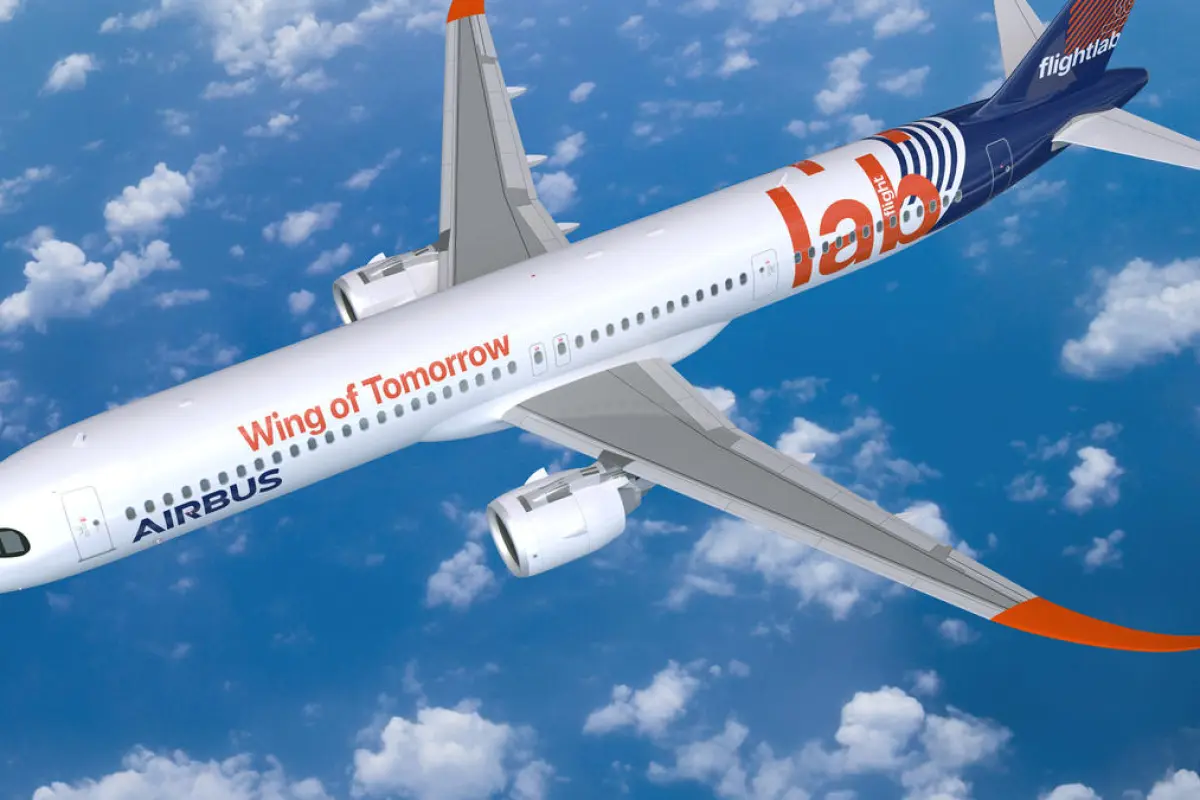
Airbus Advances Wing of Tomorrow Program with Flight-Testing Phase
Next-Generation Wing Design
At the recent Farnborough International Airshow, Airbus announced the upcoming flight-test phase of its Wing of Tomorrow initiative. This project focuses on developing advanced airliner wings with spans so extensive that folding wingtips will be necessary for compatibility with current airport infrastructure.
Efficiency Through High Aspect Ratio
The design of these wings draws inspiration from gliders, which feature long, slender wings to maximize lift-to-drag ratios. This configuration allows gliders to travel greater distances while minimizing altitude loss. The efficiency of a wing increases as its aspect ratio—the span divided by the average width—increases. While theoretically, an infinitely long wing would be most efficient, practical limitations at airports require a compromise.
Composite Materials and Environmental Goals
Airbus is engineering high-aspect-ratio wings using composite materials for future single-aisle commercial aircraft. The objective is to significantly reduce aerodynamic drag, leading to notable decreases in both fuel consumption and carbon emissions.
Folding Wing Technology
The new wing design will extend the span of aircraft such as the Airbus A321neo by up to 5 meters (16.5 feet) per wingtip. However, current airport gate and taxiway standards, such as those defined by ICAO Code C, limit wingspans to 36 meters (118 feet) for single-aisle aircraft. The extended wings would exceed these limits, making folding mechanisms necessary to maintain compatibility with existing airport gates.
Implementing folding wings involves more than adding hinges and actuators; it introduces new aerodynamic and structural challenges, including the need to balance the wing while accommodating additional hardware.
Flight Testing and Development Timeline
To expedite development, Airbus plans to test non-folding demonstrator wings that replicate the characteristics of folding designs over the next three years. This approach allows for the evaluation of aerodynamic performance and structural integrity before deploying fully operational folding wings on commercial aircraft.
The Wing of Tomorrow program is positioned as a key element in Airbus’s strategy to enhance flight efficiency and reduce the environmental impact of future single-aisle aircraft. The upcoming flight-test campaign aims to explore the benefits of longer wings and challenge traditional design boundaries.